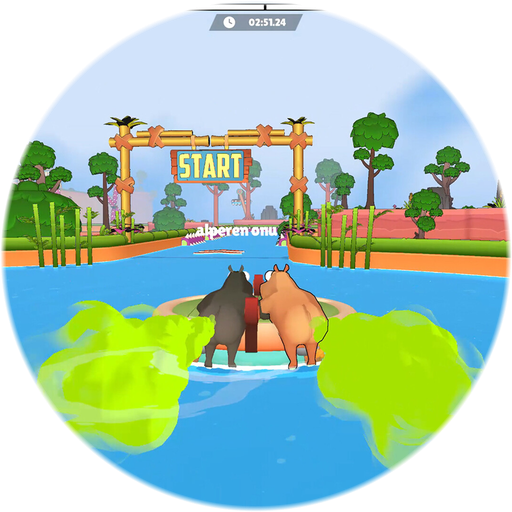
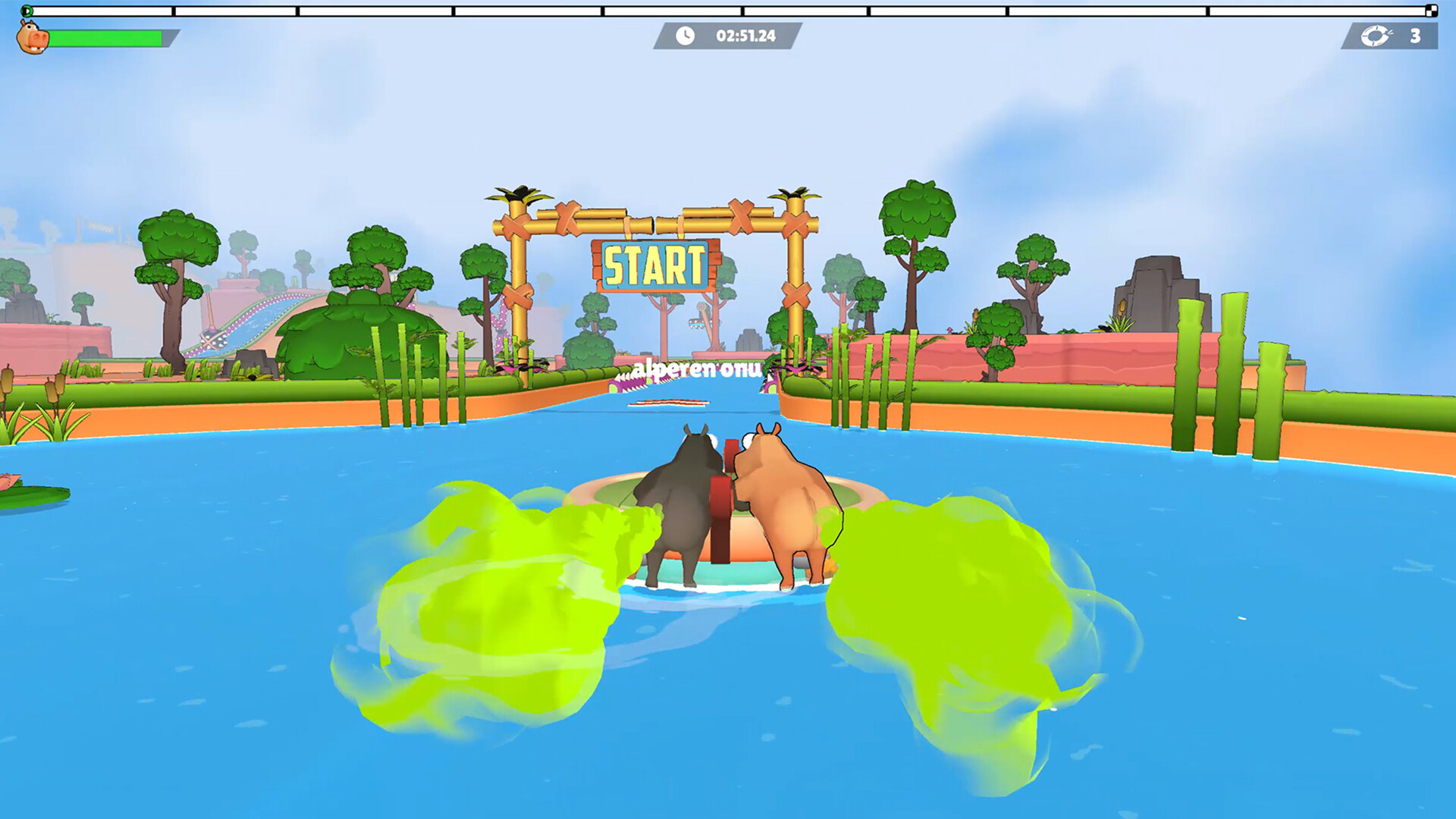
Mastering Fart Together controls and raft steering tips is the ultimate test of any gaming friendship. When you and your squad jump into GamesMrkt’s physics-based co-op adventure, you quickly realize that survival depends entirely on synchronization. If you want to conquer chaotic rapids without sending your vessel spinning into a spiked wall, understanding Fart Together controls and raft steering tips is non-negotiable.
Navigating physics-based obstacle courses with 2 to 4 players requires more than just frantic button-mashing. Because every single teammate shares the exact same floating platform, your individual inputs merge into one collective momentum. In this comprehensive guide, we break down everything you need to know about steering mechanics, timing routines, and obstacle strategies to help your crew reach the finish line.
Understanding the Core Mechanics of Shared Steering
When playing in online co-op, your primary challenge is that no single player has absolute control over the vessel. Every burst of gas, directional tilt, and timing decision directly influences the shared raft. Before you attempt any advanced maneuvers on the Fart Together Steam Page, your crew must understand how individual inputs translate into movement.
The game supports both standard controllers (Xbox and PlayStation) and a keyboard-only input option. Regardless of your hardware choice, input familiarity is only half the battle.
| Input Element | How It Affects the Shared Raft | Initial Practice Strategy |
|---|---|---|
| Direction | Steers the angle of the propulsion thrust | Agree on a target landmark before firing |
| Force / Gas Power | Determines acceleration and momentum speed | Practice low-power drifting in open water |
| Timing | Dictates when the combined force hits the water | Use a strict verbal cue word like “go” |
Player experience shows that rushing into difficult stages without testing your baseline inputs leads to immediate disaster. Spend your first few minutes in an open stretch of water simply communicating when and how you apply pressure.
Mastering Direction Before Boosting Power
A common mistake for rookie crews is answering every navigational problem with extra gas power. When your raft drifts off course, your immediate instinct might be to push harder. However, community reports indicate that uncontrolled force usually compounds mistakes rather than fixing them.
To keep your vessel stable, focus on establishing a shared directional language before applying heavy thrust.
| Navigational Phase | Common Team Mistake | Recommended Correction |
|---|---|---|
| Approaching Turns | Shouting multiple conflicting directions | Designate one primary caller per section |
| Open Water Drifts | Applying gas at uneven intervals | Count down a three-second alignment window |
| Drift Recovery | Panicking and spamming random inputs | Stop boosting completely to let the current reset |
Keep your callouts specific and concise. Instead of yelling “left!”—which can be confusing depending on a player’s camera angle—reference specific visual targets like “toward the rock arch” or “aiming for the left side of the buoy.”
Coordinating Timing and Gas Management
Timing is the beating heart of cooperative propulsion. Even if every crew member agrees on the intended direction, acting a split-second too late can ruin a precision maneuver.
When tackling demanding water tracks, assign one designated caller for tricky sections. This person monitors the upcoming hazards, calls out the target destination, and drops the final action cue.
| Timing Strategy | Purpose | Best Used For |
|---|---|---|
| Single Cue Word | Eliminates reaction lag between players | Sharp 90-degree river bends |
| Stamina Awareness | Prevents teammates from running out of gas | Long stretches of heavy rapids |
| Post-Run Review | Diagnoses why a specific maneuver failed | Between retry attempts |
If a run goes sideways, avoid blaming the game’s physics engine right away. Instead, practice constructive reviews where players clearly state their actions, such as: “I fired my gas half a second after your cue.” Adjust one variable at a time—either your timing or your angle—before trying the obstacle again.
Conquering Narrow Passages, Turns, and Hazards
As you progress through the obstacle courses, the river environment becomes increasingly hostile. You will encounter narrow rock passages, spinning rollers, and balance-disrupting hazards that test your team’s patience.
| Course Obstacle | Primary Danger | Optimal Team Response |
|---|---|---|
| Narrow Passages | Scraping walls halts momentum | Align the raft’s entry angle beforehand |
| Sharp Turns | Over-steering into riverbanks | Initiate counter-thrust early to drift smoothly |
| Moving Obstacles | Timed traps that block the path | Pause gas input and wait out the cycle |
| Balance Hazards | Flips the raft or changes orientation | Stop all independent inputs immediately |
When navigating narrow straits, make sure every player points their steering vector straight ahead. Trying to adjust your angle inside a tight corridor usually results in a catastrophic wall collision.
Fixing Common Team Control Problems
Even experienced co-op groups hit rough patches where nothing seems to go right. When your raft constantly spins out of control, run through this quick troubleshooting checklist to get back on track:
| Symptom | Underlying Cause | Quick Fix |
|---|---|---|
| Raft spins in circles | Players are firing gas in opposite directions | Stop all inputs for two seconds to reset |
| Consistently hitting walls | Poor anticipation of river currents | Look two screens ahead and call turns earlier |
| Arguments breaking out | Overlapping, chaotic voice comms | Enforce strict radio silence except for the designated caller |
| Stuck on a specific stage | Ignored stamina or fatigue limits | Take a two-minute break between retry loops |
Keep your troubleshooting sessions brief and lighthearted. The game is designed to generate hilarious moments of chaos, so maintaining a positive team attitude is just as important as mastering the control layout.
Frequently Asked Questions
What are the main Fart Together controls?
Fart Together controls center around coordinating direction, timing, and gas power with your teammates. In multiplayer co-op, 2 to 4 players share a single floating platform, meaning every player’s individual thrust force and angle directly alter the raft’s collective momentum.
How many players can play Fart Together?
The game supports 2 to 4 players in online co-op mode. Every participant must synchronize their inputs to steer the shared raft through increasingly difficult physics-based water obstacle courses.
How long does a typical demo or run take?
Depending entirely on your team’s communication and coordination level, a standard course run or demo session typically lasts between 15 and 55 minutes. Groups with strong synergy will breeze through checkpoints much faster than chaotic squads.