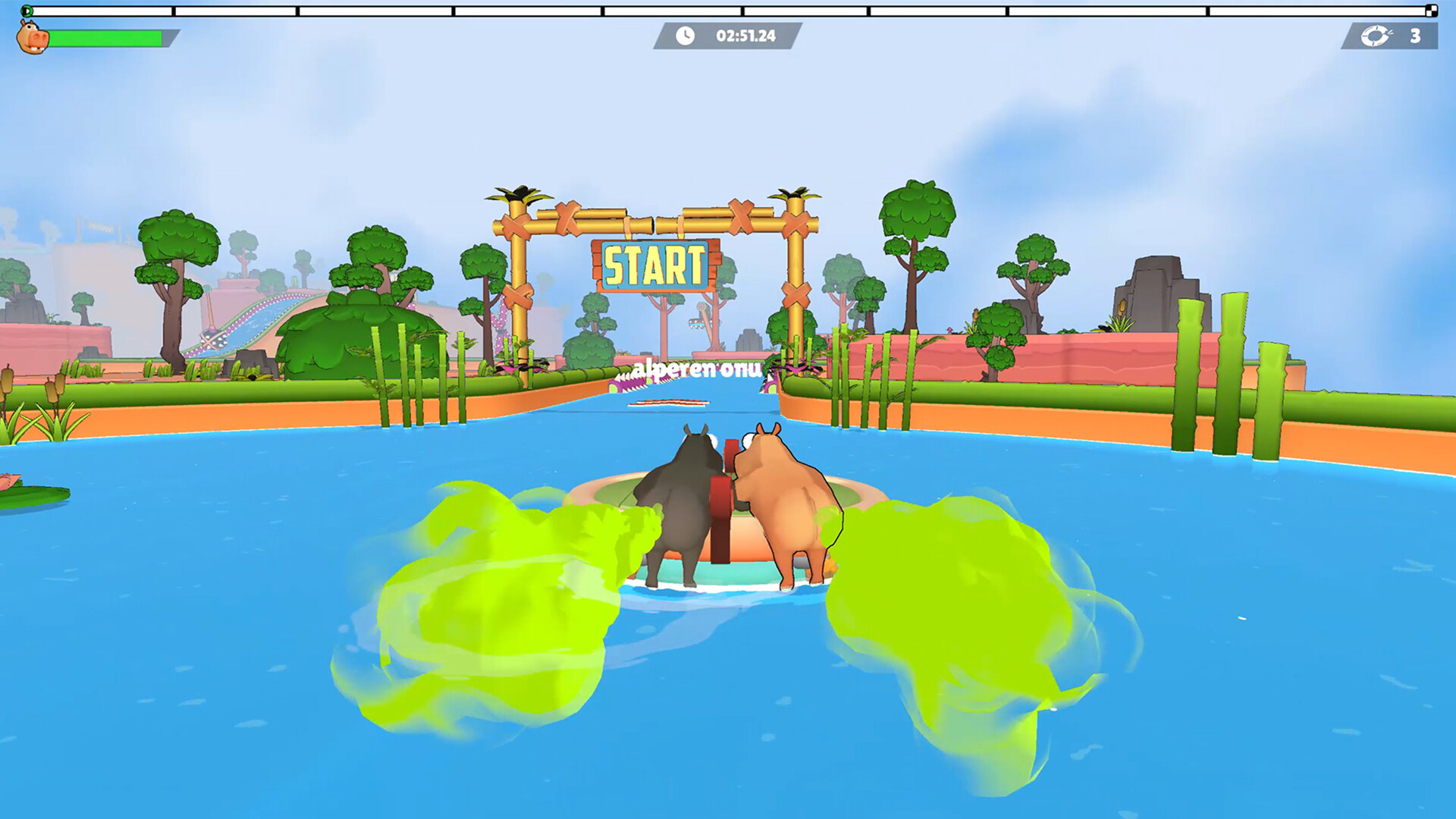
Ready to test your friendships and your propulsion timing? If you are diving into the chaotic physics-based world of Fart Together, navigating Fart Together obstacles requires more than just button mashing—it takes absolute synchronization. Mastering Fart Together obstacles is the only way to steer your shared raft through the game’s wild and hilarious courses without spinning out into disaster.
Developed by GamesMrkt and heading to Steam on October 29, 2026, this 2-to-4 player co-op game turns flatulence into a high-stakes navigation tool. Whether you are squeezing through narrow passages or dodging sudden hazards, understanding how your gas power interacts with the environment is essential for victory.
Understanding the Physics of Your Raft
The core mechanic of the game revolves around a shared vessel that reacts dynamically to every team member’s input. According to community reports and early access previews, the raft does not behave like a standard video game vehicle. Instead, it relies on a quirky physics engine where force, direction, and timing dictate every movement.
When you encounter environmental hazards, individual actions no longer matter; the team functions as a single propulsion unit. If one player triggers their gas power too early or faces the wrong direction, the entire vessel instantly goes off course.
| Physics Factor | How It Affects Movement | Common Mistake |
|---|---|---|
| Force | Determines how fast and far the raft surges forward. | Farting too hard into a tight corner. |
| Direction | Steers the vessel based on individual positioning. | Pointing away from teammates, creating opposing thrusts. |
| Timing | Synchronizes thrust to maximize momentum. | Reacting too late to incoming obstacles. |
As developers GamesMrkt noted during early development discussions, the secret to success is never about pushing out maximum power. It is always about releasing gas together at the exact right moment.
Navigating Narrow Passages and Sharp Turns
One of the most frustrating types of Fart Together obstacles involves tight corridors and sharp, sudden turns. These sections punish uncoordinated teams and often lead to plenty of shouting over voice chat.
When approaching a narrow channel, momentum management is your best friend. If your team enters too fast, you will bounce off the walls and lose precious seconds.
| Passage Type | Recommended Strategy | Risk Level |
|---|---|---|
| Narrow Straightaways | Alternate gentle bursts to maintain a steady, straight glide. | Low |
| Sharp Hairpin Turns | Stop thrusting early, pivot direction, and deliver one synchronized blast. | High |
| Chokepoints | Designate a callout leader to count down the exact moment of ignition. | Medium |
Player experience suggests that assigning specific roles or having a designated caller can drastically improve your odds of surviving tight spaces. When everyone knows who is counting down, the margin for error shrinks significantly.
Dodging Moving Hazards and Dynamic Obstacles
Static walls are easy to memorize, but dynamic hazards require fast reflexes and adaptability. As you progress deeper into the courses, you will face moving barriers and environmental traps designed to knock your raft off balance.
To overcome these shifting challenges, your team must master three distinct pacing states:
- Speeding Up: Necessary for clearing sweeping gaps or escaping closing gates.
- Slowing Down: Crucial for letting a moving hazard pass safely ahead of your path.
- Simultaneous Action: The ultimate maneuver where all 2–4 players execute an identical move at microsecond precision.
| Hazard Type | Behavior | Best Countermeasure |
|---|---|---|
| Swinging Pendulums | Sweeps across the path at regular intervals. | Pause momentum, let it pass, then burst through. |
| Closing Gates | Rapidly opens and shuts based on a timer. | Build up a shared charge and burst through at opening. |
| Bouncing Bumpers | Knock the raft off course upon impact. | Aim slightly away from them to use their rebound safely. |
A single small mistake when dodging these hazards can turn a pristine run into a comedic disaster, but pulling off a last-second rescue maneuver provides an unmatched rush of adrenaline.
System Requirements for Smooth Co-Op Runs
Before you and your friends jump into the chaos, ensure your gaming rig can handle the physics calculations without stuttering. Lag or frame drops during a synchronized thrust can ruin an otherwise perfect run. Check out the official Fart Together on Steam page for complete details, or review the hardware guidelines below.
| Specification | Minimum Requirements | Recommended Setup |
|---|---|---|
| Operating System | Windows 10 (64-bit) | Windows 10/11 (64-bit) |
| Processor | Intel Core i5-8400 / AMD Ryzen 3 1200 | Intel Core i5-10400 / AMD Ryzen 5 3600 |
| Memory (RAM) | 8 GB RAM | 16 GB RAM |
| Graphics Card | NVIDIA GTX 1050 Ti / AMD RX 560 | NVIDIA GTX 1660 / AMD RX 590 |
| Storage Space | 4 GB available space | 4 GB available space |
Frequently Asked Questions
How many players are needed to tackle Fart Together obstacles?
The game supports 2 to 4 players in online co-op. While you can play with various group sizes, having a full squad of four makes coordinating turns and overcoming physics-based puzzles even more hilarious and challenging.
What is the biggest mistake players make with Fart Together obstacles?
The most common error is trying to propel the raft independently without communicating. If players push in opposite directions or fire off gas at random times, the raft will spin out of control and crash into walls.
Is Fart Together available in Early Access?
Yes, the game launches into Early Access on October 29, 2026. The developers plan to gather community feedback over 2 to 3 months to refine physics, add more courses, and introduce new obstacles.
Will there be more courses and obstacles added later?
According to the development team at GamesMrkt, the full release will feature expanded content, including additional courses, custom options, game modes, and fresh environmental hazards based directly on player suggestions.